
Colorectal Cancer Screening
Endoterapia PFG delivers the program under a contract with the National Health Fund (NFZ).
The program is available to individuals who:
- Have no clinical symptoms suggestive of colorectal cancer
- Have not undergone a colonoscopy within the past 10 years
- Meet the age criteria:
- Aged 50–65, or
- Aged 40–49 with a first-degree relative diagnosed with colorectal cancer
Eligibility for the program is based on the completion and submission of a QUESTIONNAIRE at the registration desk (available in Polish language version only due to payer requirements) or send by email kontakt1@przychodniapfg.pl
Colonoscopy is a safe procedure lasting 20–40 minutes. Depending on medical indications, the examination may be performed under general anesthesia.
Preparation instructions for colonoscopy can be found under the EXAMINATIONS tab.
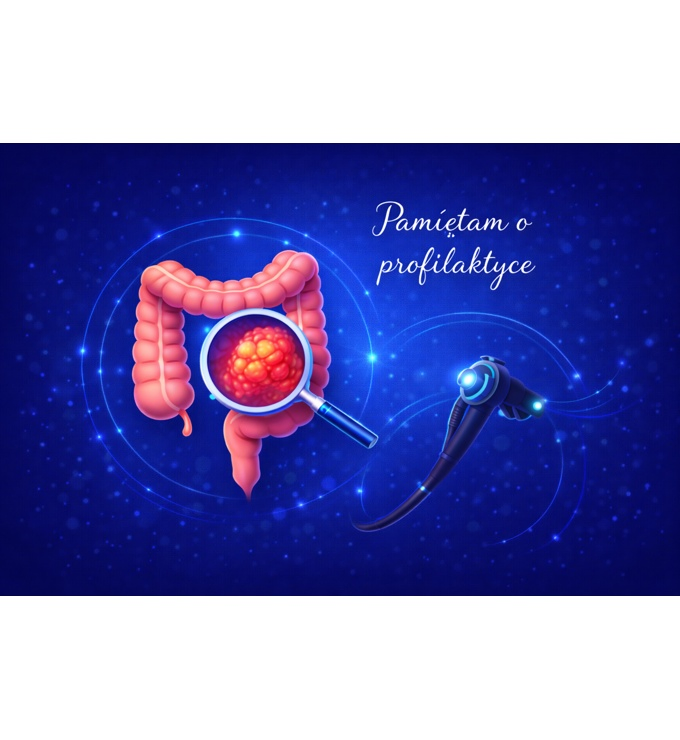
Colorectal Cancer Screening program
The aim of the Colorectal Cancer Screening program is to reduce the incidence of and mortality from this disease.
Colorectal cancer is the second most common malignancy in Poland, with over 18,000 new cases diagnosed each year. Colorectal cancer develops from benign lesions known as polyps, a process that typically takes many years — most often over a decade. By undergoing examination at the right time and having polyps removed, it is therefore possible to prevent cancer from developing. Cancer detected at an early stage is also very often curable. Neither polyps nor early-stage cancer typically cause any symptoms. The purpose of preventive colonoscopy is to identify these symptom-free lesions and, where possible, to remove them. This approach can reduce the risk of developing colorectal cancer by as much as 60–90%.
The prevalence of polyps and the risk of malignant transformation increase with age. The significant majority of new cases occur in people over the age of 65. The inclusion of women and men between the ages of 50 and 65 in the program is aimed at detecting potentially curable lesions. In this age group, 25% of individuals have polyps and 5% are at risk of developing cancer. Preventive screening and the removal of any lesions identified can substantially reduce this risk.